Andean Adventures: Peru 2023
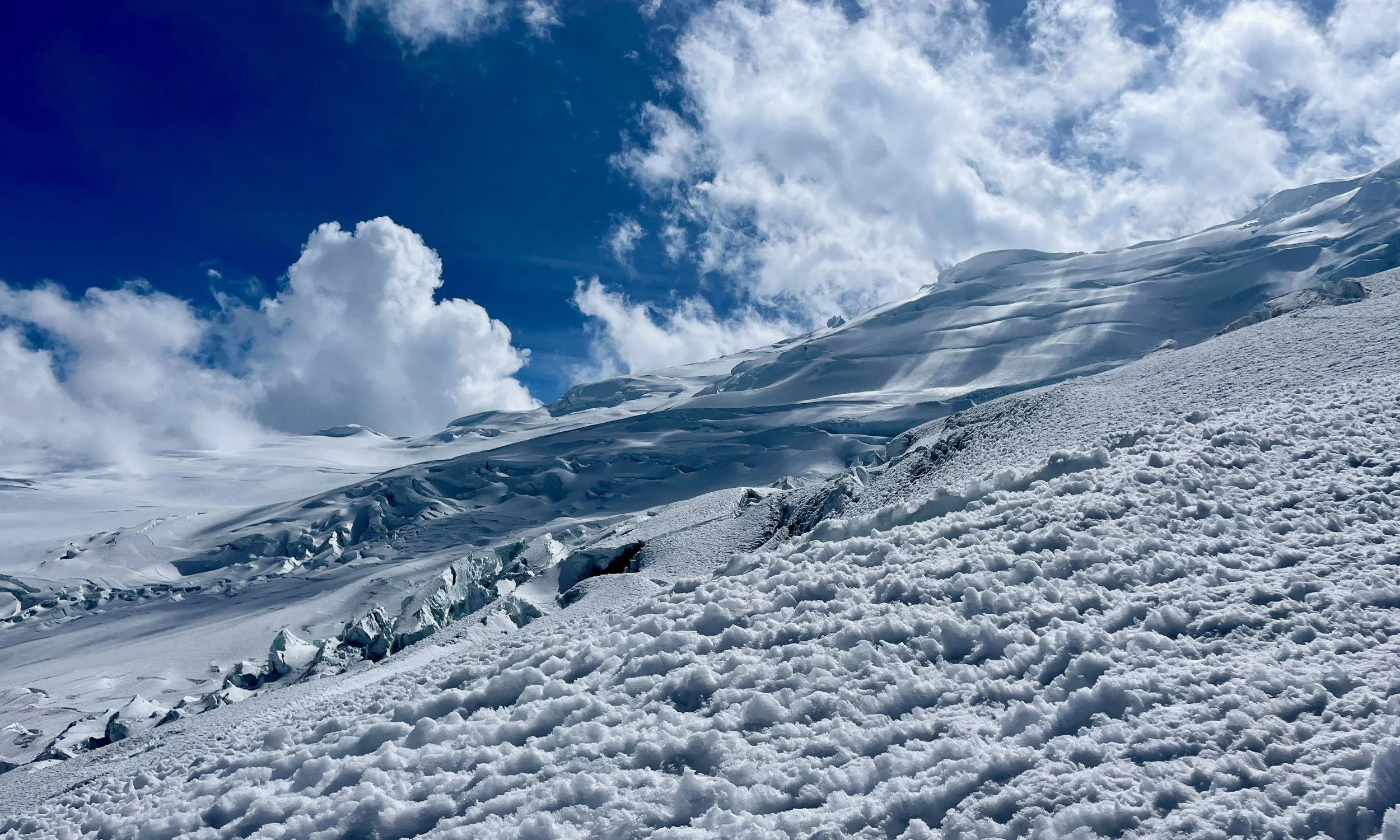
The complex west face of Nevado Copa (6,188m), Peruvian Andes.
Sweeping up from the glacier 1,000 metres below, the imposing west face of Nevado Copa, with its domed summit at 6,188 metres, is a complex mass of twisting crevasses, seracs, and vast fields of nieves penitentes. Whilst the face was never too steep, weakening snow bridges and intricate route finding gave ample cause for caution.
From a glacial high camp at 5,200 metres, Karen and I made an initial reconnaissance of the lower snow slopes to a high point of 5,536 metres on 26 August 2023. Alan, who had taken this day to rest, joined our rope party for a summit attempt the following day, and we departed frost-encrusted tents at 4 am under clear and cold skies.
An initial 100-metre scramble over smooth moraine slabs led to a broad, convex snow ramp that forms Copa’s western spur. After reaching the previous day’s high point, we traversed northwards along the face, weaving between open crevasses and skirting beneath a towering wall of deep blue serac ice. Safer ground followed, although breaking trail on steepening snow drained energy, as further crevasses were negotiated and the 6,000-metre contour line drew closer.
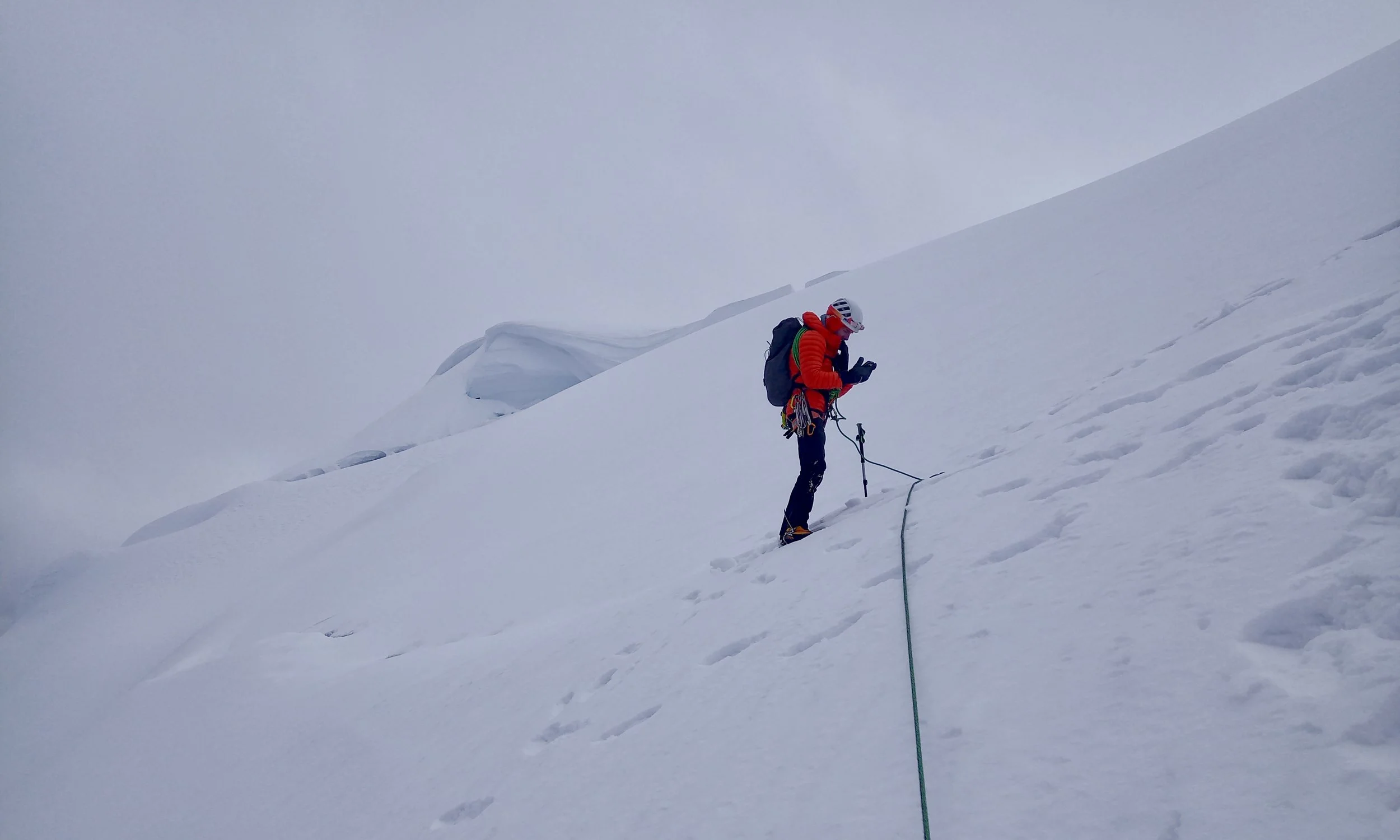
Stopping for a navigation check at approximately 5,800 metres on the west face of Nevado Copa in Peru’s Ancash Region.
Pausing below yet another crevasse high on the face, we considered our options. Concern was growing about the sun’s weakening effect on the myriad snow bridges we had crossed earlier that morning. With half an hour before our agreed turnaround time, it was clear that any hopes of summiting had been dashed, and the merits of continuing were carefully weighed.
At 8.59 am and 260 metres below a rapidly clouding summit, the decision was made to turn around. We descended through the maze of impeding snow features, which we had so adeptly negotiated only hours before, to arrive safely at high camp around midday. The summit may have proved elusive, but we had an excellent high-altitude adventure.
To climb in the Andes had been a dream for many years. Perhaps it was the allure of greater altitude, expedition-style approaches, and more complex logistics. Or maybe it was the remoteness, the Latin American culture, or the attraction of something more adventurous. It seemed to me a logical progression from climbing in the European Alps, and it would serve well to broaden my mountaineering apprenticeship before further exploratory expeditions to the Greater Ranges.
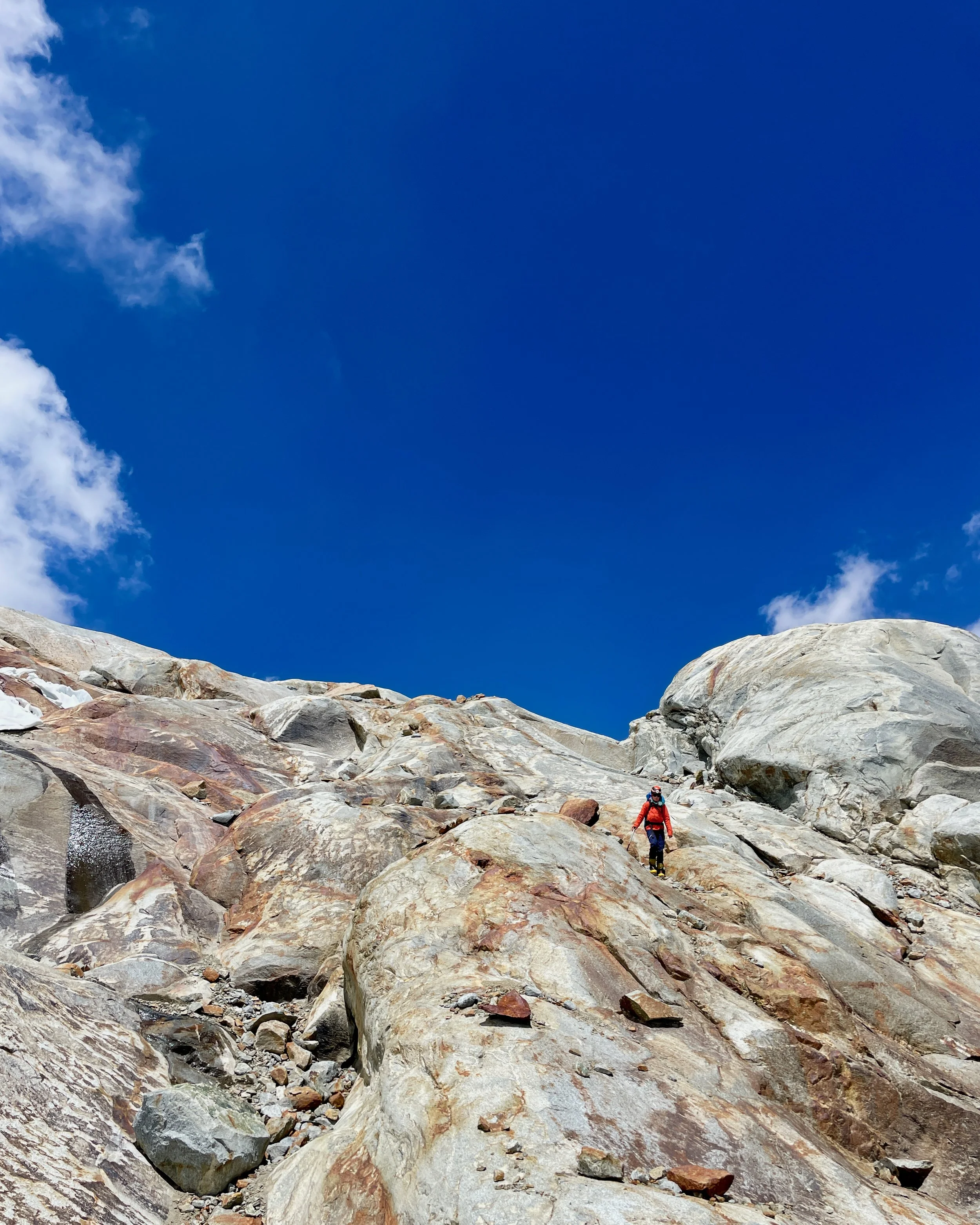
Karen descends the smooth, steep slabs above base camp on Nevado Copa. Pre-dawn route finding through these complex channels of rock, cut and polished by millennia of glacial activity, is challenging with only a head torch to illuminate the path ahead.
This venture also had more practical desired outcomes. With the International North Sikkim Expedition 2023 a short three weeks after my return to the UK, this was the perfect opportunity to test new equipment and refine my living in the mountain environment. I wanted to provide Montane with feedback on some of our latest gear, test my choice of Precision Fuel & Hydration products, and capture content for our long-term expedition partner Expedition Foods. I was also enthusiastic to better understand options for water purification, mountain nutrition, medical supplies, expedition cooking, and the development of acclimatisation profiles.
I also believed that time in the Andes might shed light on my own elusive motivations for expedition climbing: why am I inescapably drawn to these remote environments, and why do I keep coming back when success, or even the chance of a few days at the sharp end, often seems so fleeting? Since it has become clear I will not stop doing this anytime soon, how do I curate a lifestyle where regular big expeditions are possible, and to what ultimate purpose?
Of course, I have some insights that, with further contemplation, go some way toward furnishing useful answers to such questions. For now, however, they give plenty to consider whilst waiting out rainstorms under the flapping fabric of our small, tented home.
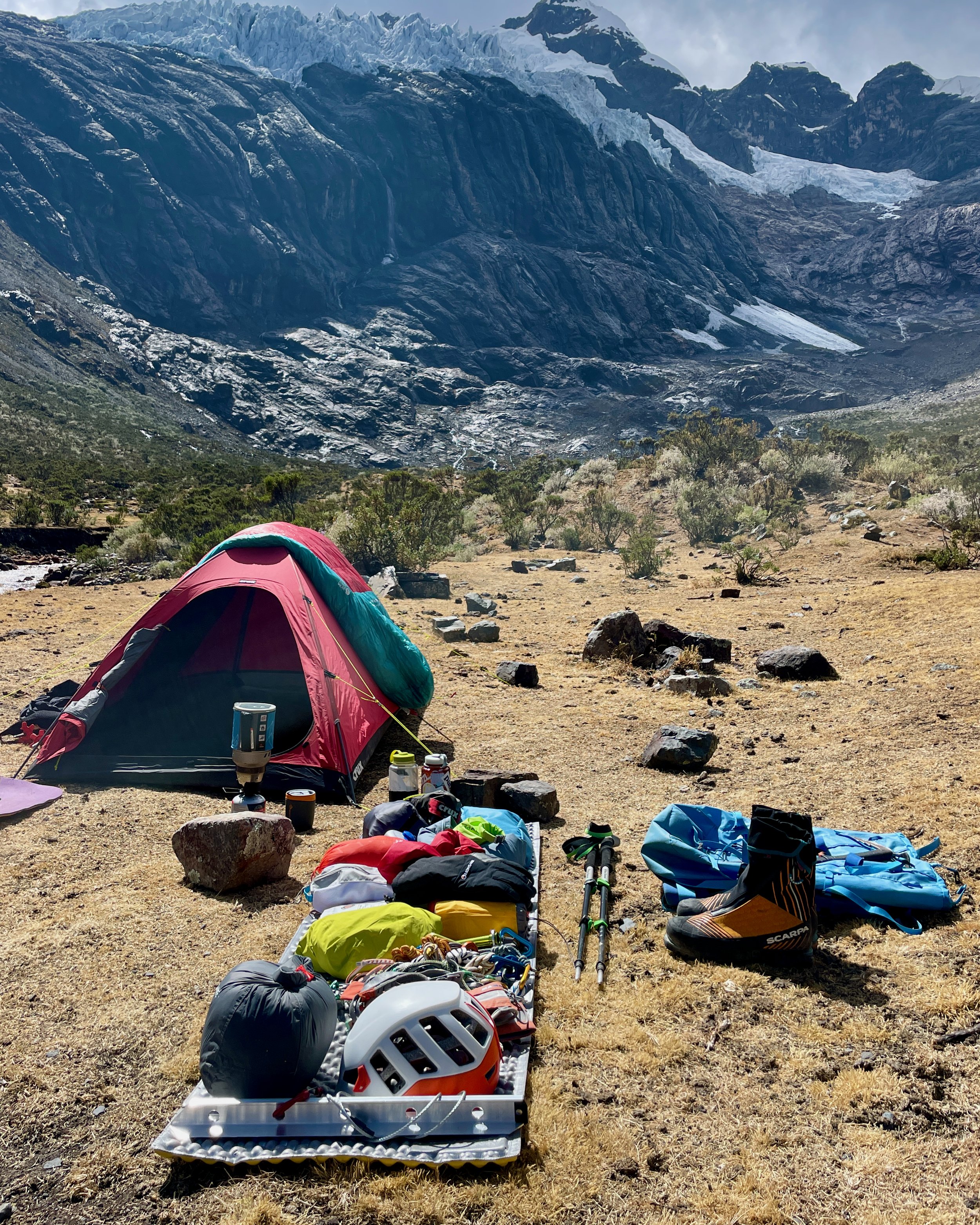
Our small high camp at 4,350 metres in the Cayesh valley of the Chinchey massif. Remote, quiet, and seldom visited, this was the perfect acclimatisation objective, even if heavy rainfall had dashed any hopes of a summit attempt on Nevado Maparaju.
After arriving in Huaraz on 6 August, Karen and Alan had to wait several days for delayed luggage to arrive from Lima. Keen to start acclimatising, we spent the next few days exploring the hills and pequeños lagos surrounding the Ancash capital. Once all bags had finally materialised, preparations were quickly made for a five-day outing to summit Nevado Maparaju (5,326m) in the Chinchey massif.
From the trailhead at Pitec, 20 kilometres east of Huaraz, we established a base camp next to a freshwater spring where the idyllic Quilcayhuanca valley forks to the north and the Cayesh valley to the east. The following day, we made an acclimatisation trek to the 5,100m Huapi Pass, which offers striking views over the east face of Ranrapalca and the imposing south face of Palcaraju. On 13 August, we established a high camp at 4,350 metres in the Cayesh, which allowed for an acclimatisation reconnaissance up to 4,822 metres the following day.
With the return to high camp came two days of heavy rain. Waking at 1.30 am on 15 August for a planned summit attempt, a torrential downpour and thick cloud put paid to any hopes of further climbing. During a drier spell later that morning, we packed up high camp and descended to base camp, waiting out yet more rain until our mules and arrieros arrived the following morning.
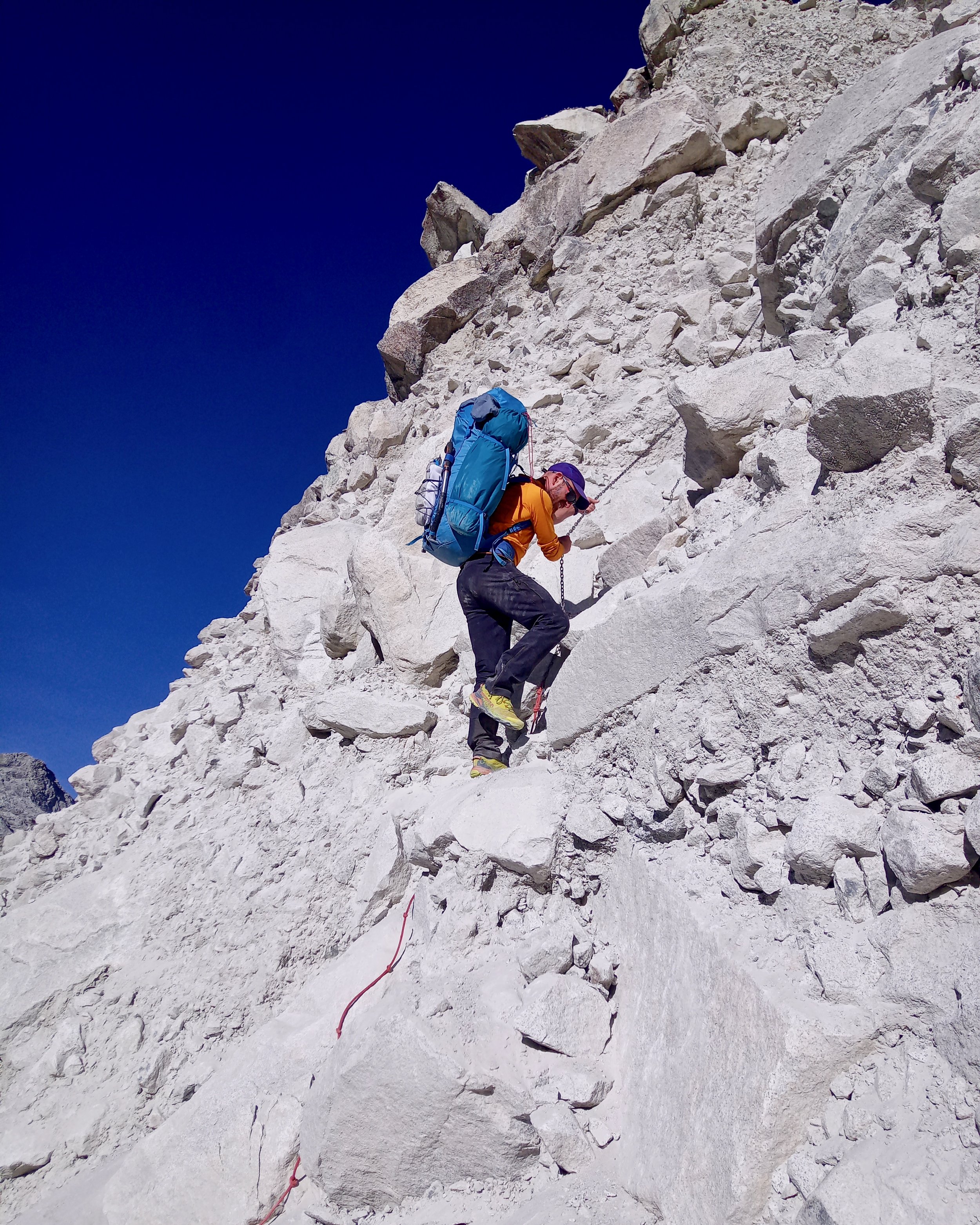
Descending loose, steep scree slopes on the technical trails from base camp to a high camp at 4,850 metres. Blazing sun, heavy packs, and clouds of ivory-white dust make for a feeling of true adventure on the approach to Nevado Pisco.
This outing proved to be a superb proof of concept. I learnt we could use mules to establish a comfortable base camp, giving us the opportunity to acclimatise effectively before moving to a higher camp that was optimally placed for a summit attempt. My layering system worked well; I ate well and stayed hydrated, and I felt fit on the mountain. I felt taking a day to reconnoitre the start of the route was wise, and our decision to call off the summit attempt due to unfavourable weather conditions was sensible.
Would it be possible to do this route in a two-day push from Huaraz? Yes. Would such an approach afford the same opportunities for acclimatisation, learning, and, ultimately, enjoyment? I doubt it.
Nevado Pisco at 5,752 metres was selected as our next objective. Nestled in the heart of the Cordillera Blanca, the mountain commands a superb position overlooking the valley and trailhead of Cebollapampa. The peak came highly recommended by friends; we understood conditions to be good, and at nearly 450 metres higher than Maparaju, the altitude suited our acclimatisation profile perfectly. We met our mules and arrieros by the trailhead at Cebollapampa and set off up the steep twisting trail to establish a base camp at 4,650 metres. Set just below the Refugio Perú, in the shadow of the grand east face of Nevado Huandoy, our tents nestled beneath a boulder field on a small green pasture, offering a spectacular panorama of Pisco’s steep south face.
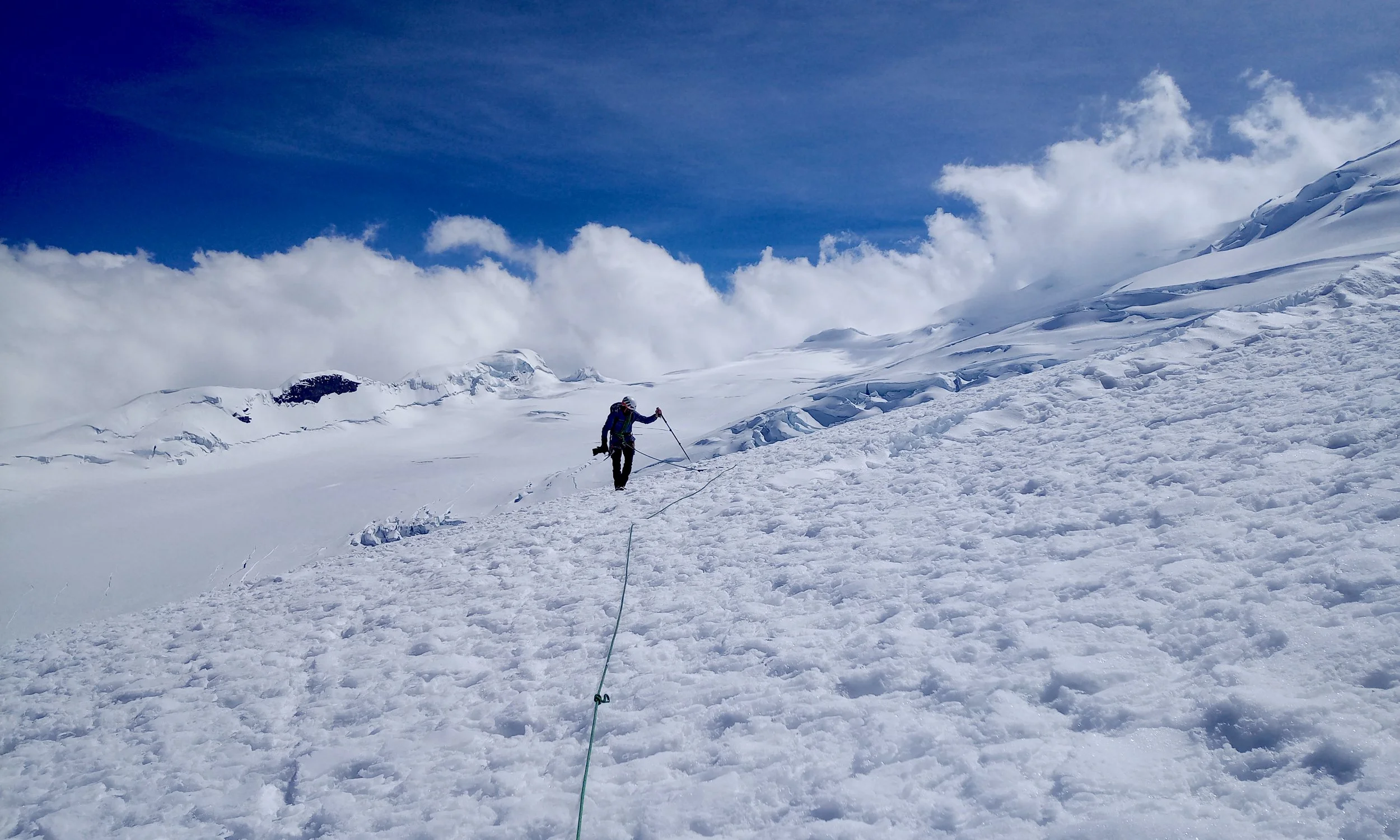
Checking crevasses on the complex west face of Nevado Copa (6,188m).
The following day, we established a moraine camp at 4,850 metres. We were blessed with a magnificent position on the northern flank of the severely retreated Huandoy Glacier, a poignant reminder of the dramatic and terrifying challenges these precarious mountain environments now face. We took 19 August as a rest day and decided to explore the short distance from camp to the edge of the Pisco Glacier. We enjoyed life in this wild place. The situation is truly spectacular: we had fresh spring water just metres from the tents, and we were blessed with good weather. We listened to music, practised meditation, and delighted in afternoon yoga sessions. We could have taken the single-skin tents; these would have been lighter and made the approach from base camp less arduous. However, we found that a little extra comfort makes for better sleep and more effective acclimatisation, and as we planned to spend three nights up at this high camp, we felt the additional weight was well worth it.
We started before dawn on summit day. A trail leads steeply up the moraine bank to the start of the glacier. The snow was good, and the route was straightforward. We reached the col at 5,300 metres at sunrise; we were moving smoothly, and I felt well acclimatised. The short crux pitch gave a few enjoyable moves on reasonably steep ice and provided the route with some technical interest. It felt good to place a few screws; at least now, it felt like we were climbing. We summited just after 8 am under clear skies and a chilling wind. At 6,112 metres, the superbly steep south face of Chacraraju dominated the skyline and provided a beautiful backdrop to our summit photographs.
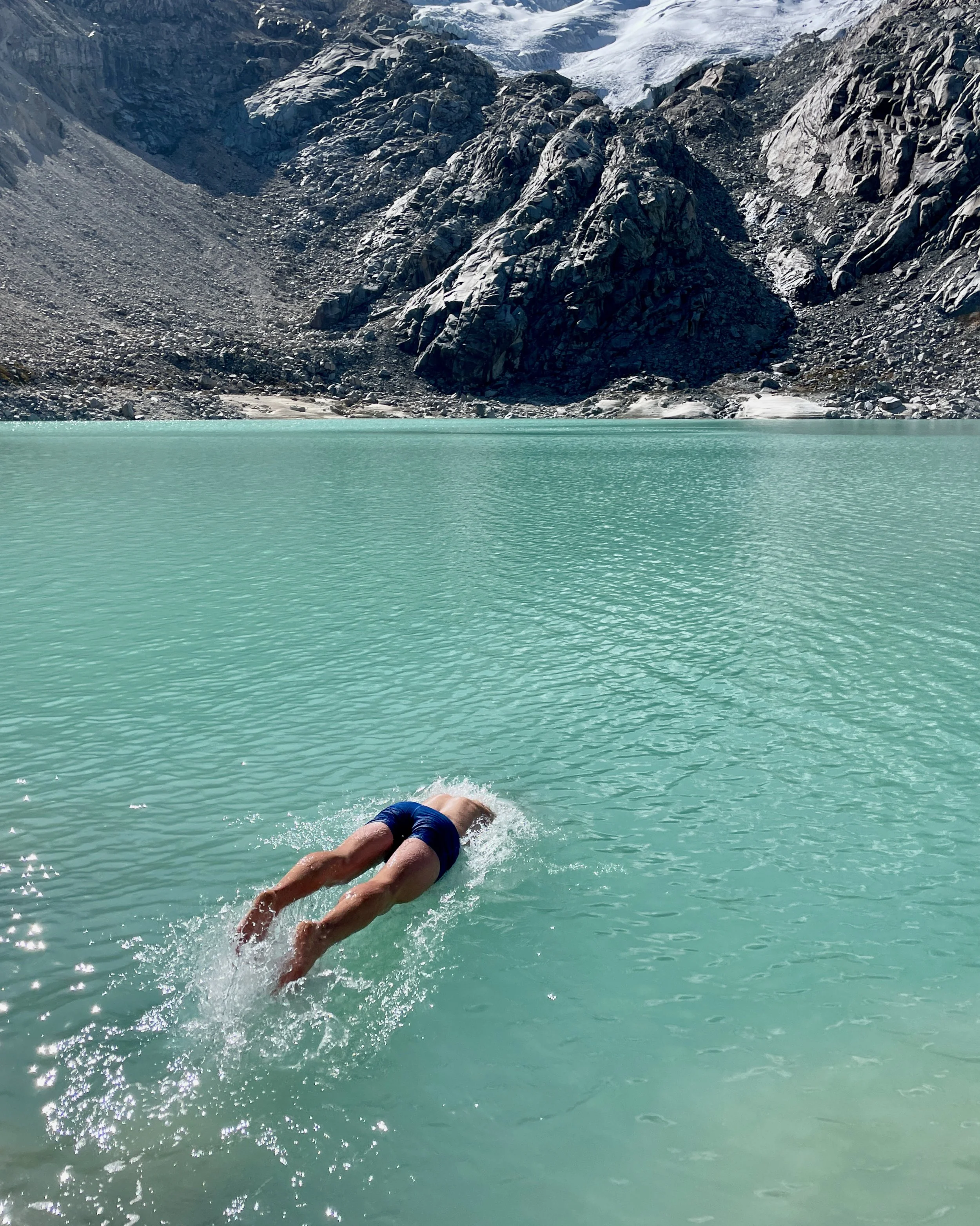
Cooling off in the emerald glacial lake below the south face of Nevado Pisco.
Our experience on Copa has made me think about how I approach each day on a big trip and how important it can be to understand your objective for a given day. Is it rest, establishing a higher camp, or a true mountain day? On the mountain, is it to survey a particular section, to reach a high point as part of a planned acclimatisation profile, or a summit attempt? If one can’t achieve that goal, maybe due to time, conditions, or human factors, is there any benefit to not turning back?
Staying on the mountain longer than you need to, just because you can, when you know you can’t achieve a defined objective, may put the team at a greater risk than was accepted when the plan for the day was first hatched.
I certainly agree with the style in which we approached these climbs. The term ‘light and fast’ in Alpinism is apt for modern marketing campaigns and certainly has its place in mountaineering, but I prefer an approach that is appropriate and efficient. With each outing, we took less, refining our clothing, technical equipment, and food. We gave careful thought to how we acclimatised, where we placed our camps, and when to commit to a summit.
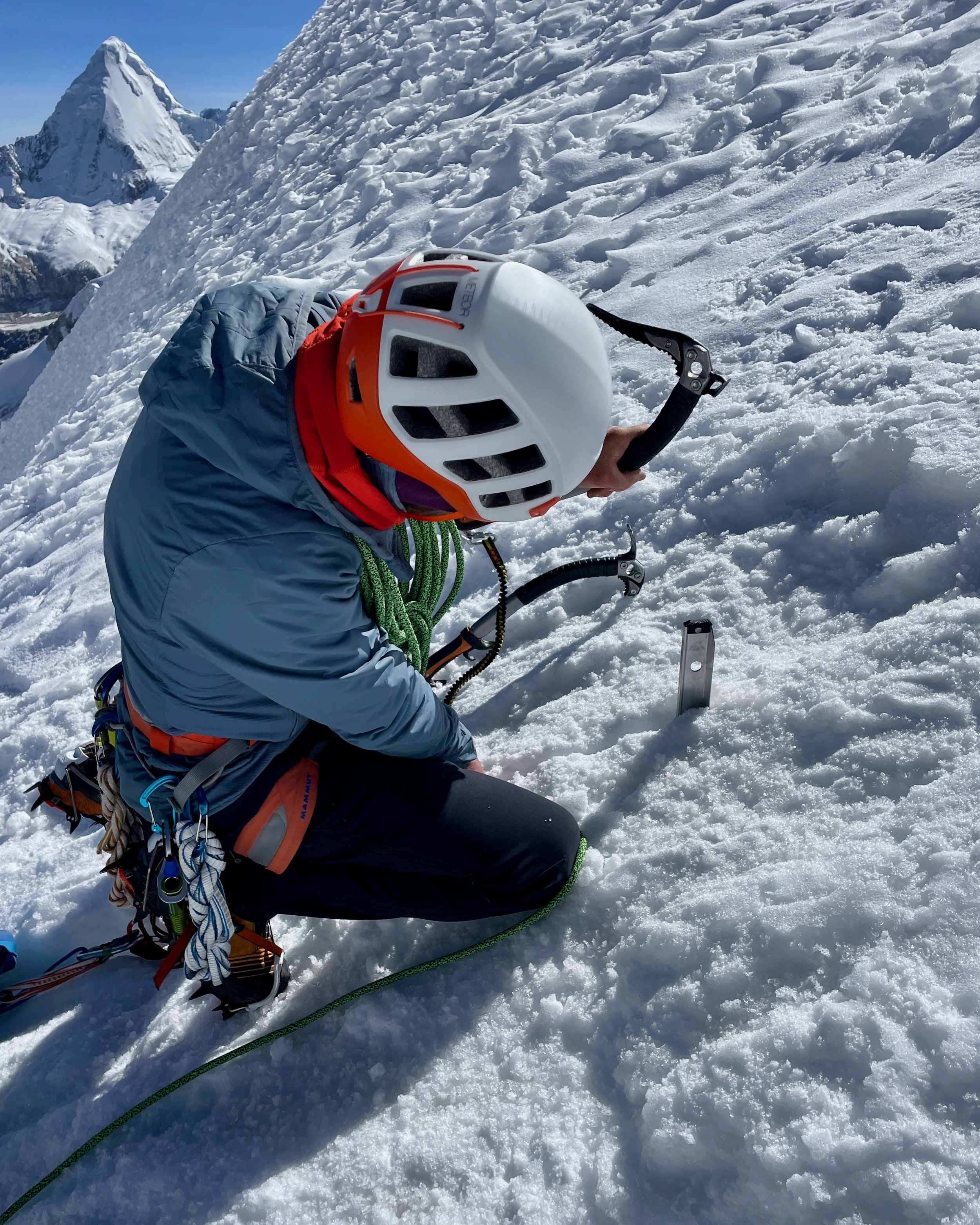
We rigged a short abseil from a snowstake for the descent of the only technical pitch on Nevado Pisco.
Using the mules added an extra dimension to the adventure. It placed due importance on the idea of enjoying the journey, not to mention allowing for the addition of a few extra comfort items at base camp. I sought to strip back everything for the summit day, seeking to carefully balance weight, safety, and the expected technicalities on the route.
I was also fascinated by some of our discussions on this trip, from secular Buddhism, sleep science, and expedition nutrition to mountain leadership, human performance, and human factors affecting decision-making. I felt inspired to delve further into all these subjects; I wanted to better understand how these disciplines can enhance performance in expedition climbing and shape my own personal development.
Indeed, it has been most interesting to think about what is next. The obvious answers come to mind first: I want to be lighter, to refine my packing list, and to be fitter, stronger, and technically more proficient. I want to hone this craft in the European Alps before taking Alpine-style climbing to expeditions in the Himalayas and other Greater Ranges.
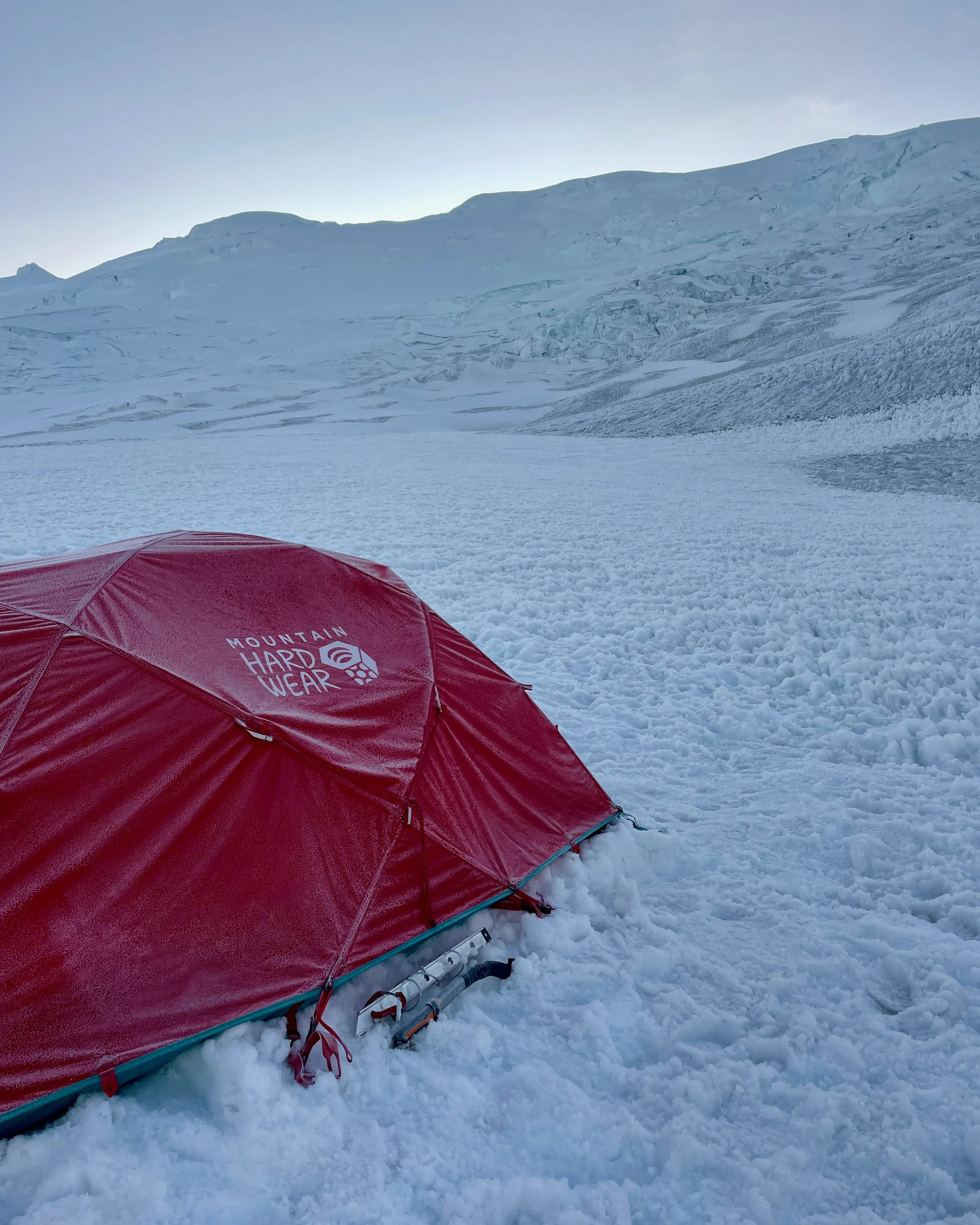
A frosty start in the frigid pre-dawn air at Nevado Copa high camp, 5,200m.
Whilst Peru has been a wonderfully enjoyable and developmental experience, I feel an unshakable desire to climb bigger routes at altitude. Perhaps, not surprisingly, my most profound sensation is that I crave increased technical stimulation and difficulty. What has also become critically apparent is that this must be supported by a far greater breadth of experience in climbing big routes in the European Alps in summer and winter.
This trip has been a great adventure. I have found enduring friendships and glimpsed a deeper understanding of the why and the how of this great game. I may not yet have all the answers, but I do have some of the questions. Often, knowing what to ask is the most difficult part of the journey. I now know what I want to be doing, and I am developing a framework to get there. I believe I have a lot to gain from further mentorship, and I must seek to expand my network, for I have much to learn. For now, however, an expedition to India is just around the corner, and with great excitement, much preparation remains to be done.
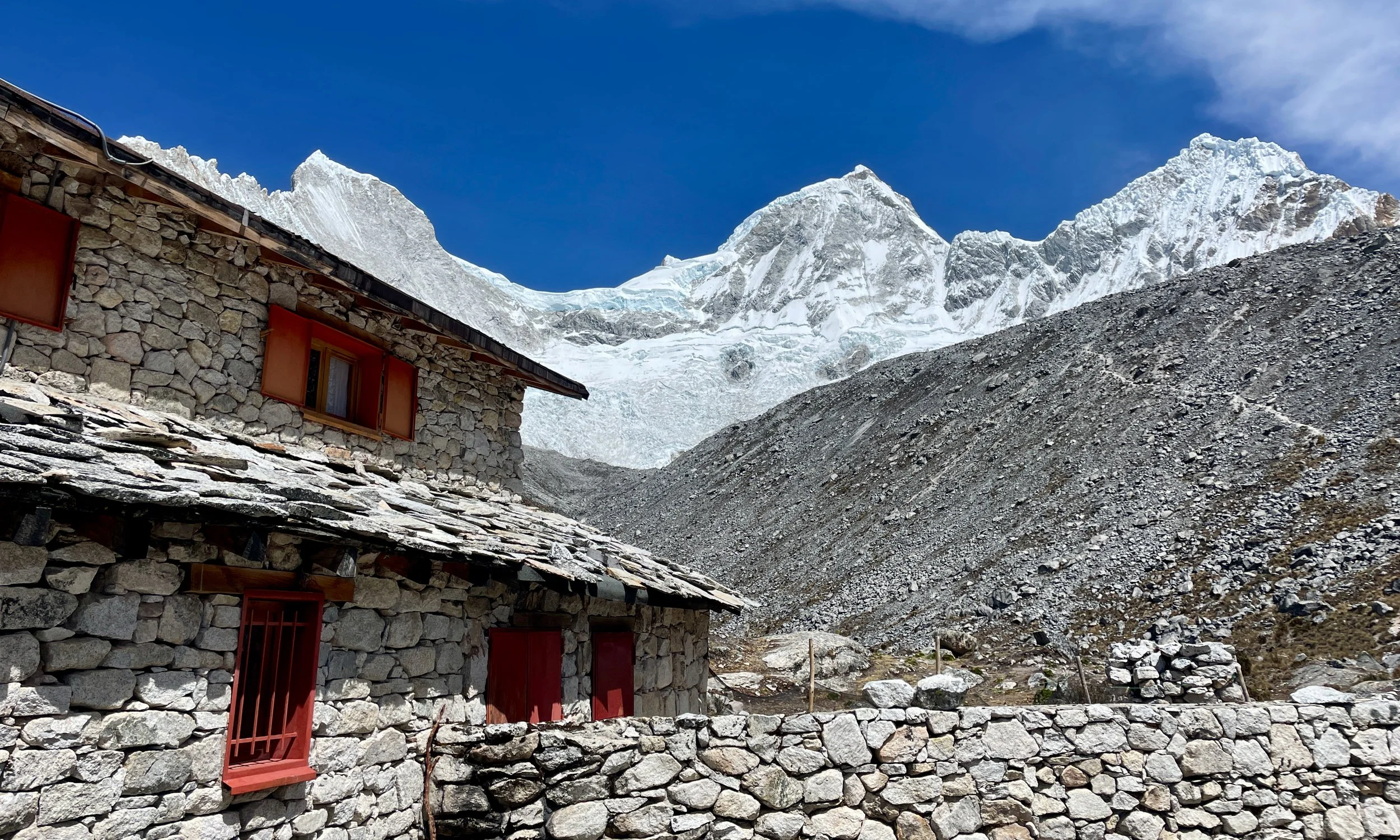
At 4,765 metres, the Refugio Perú sits just above base camp under the steep south face of Nevado Pisco in the Cordillera Blanca.
My participation in this Alpine Club Greater Ranges Meet was kindly supported by Montane, Expedition Foods, Precision Fuel & Hydration, and FATMAP. During this meet, I am also most grateful to have secured the support of Mountain Safety Research for at least two future exploratory climbing expeditions. These adventures would not be possible without their continued backing, and for this support, I am enduringly thankful.
Huaraz, Peru, August 2023